Reflecting on learning is an ongoing process. The EBI project already requires some amount of reflection and some thought on where those reflections will enable me to take the project forward some more. Therefore, it’s important to understand the specifics of reflection in the workplace.

Kolb’s is the most commonly used model to analyse the process of reflective thinking. From our own concrete experiences, we take time to review the processes — some of this will happen naturally, but that kind of reflection tends to be lost in the annals of ‘stuff that didn’t quite go right, must try again.’ The deliberate reflection gives you the opportunity to draw some conclusions along the lines of a different path, and then the active phase of the cycle, where you can try out something different. This is weak in the area of including others in your reflections. Other people do affect how you carry out work / social tasks and shouldn’t be neglected from reflective activities.
Pedlar’s process is a little more experiential-based and can be applied simply — possibly simpler than Kolb’s, which goes a long way to describing the process, but which is vague in the actions that are taken by the process.
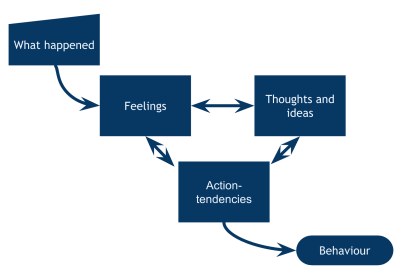
Pedlar’s process shows a beginning and an end to the process, which is far more satisfying to those who like to know how and where the process can lead. It asks about a specific action and thoughts that happened at the time and for you to spot any recurring behaviours from yourself. The reflective process goes something along the lines of:
- What happened? (the story)
- So what? (feelings, thoughts, emotions)
- Now what? (something different)
There is a clear line of linkages between the experience and the action that will be taken. This is a process that I will do in certain stages on the EBI. The first of which will be fully explored after meetings with the stakeholders.
In addition to this, Marshall did some work on arcs of attention. The inner arc reflects reflects our patterns of behaviours, thoughts and language we use; our conceptualisation of reality — our assumptions and how we respond to others. The outer arcs of attention refer to the context of attentions and our construction of reality, making sense of and responding to changing situations.

 Postcards from the edge